The Nephilim: Giants, Fallen Angels or Something Far Darker?
They appear in one of the most cryptic passages in all of scripture. Briefly mentioned, never fully explained, and debated by theologians, archaeologists and historians for centuries. The Nephilim are one of the Bible’s most compelling and disturbing mysteries and the deeper you look, the stranger it gets.
Who Were the Nephilim?
Genesis 6:1-4 introduces them with striking directness. The sons of God looked upon the daughters of men, found them beautiful, and took them as wives. The offspring of these unions were the Nephilim. Described as mighty men, men of renown, heroes of old. The Hebrew word Nephilim itself is traditionally translated as fallen ones, or those who cause others to fall. Either translation raises immediate questions.
Who exactly were the sons of God? Were they angels who rebelled against divine order and descended to earth? Were they powerful human rulers who took the title as a claim to divine authority? Or were they something else entirely. This is a category of being that ancient Hebrew had no better word for?
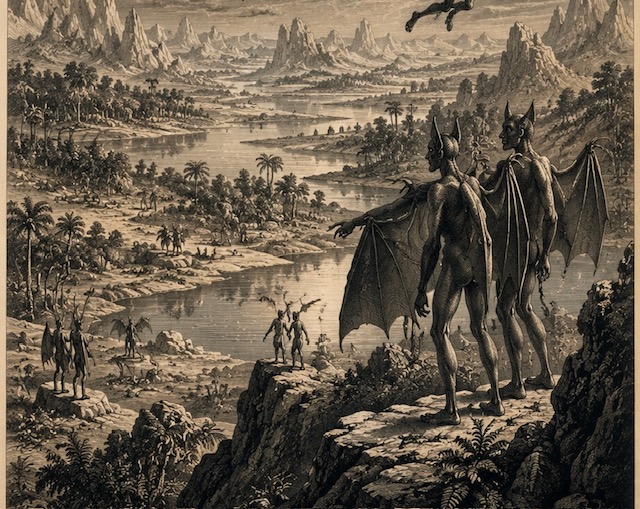
The Book of Enoch, a Jewish text considered sacred by some early Christian communities and still canonical in the Ethiopian Orthodox Church, expands the Genesis account dramatically. In Enoch, the sons of God are named. They are the Watchers. Two hundred angelic beings who made a deliberate choice to descend to earth, take human wives and father children. Their offspring became the Nephilim. Giants. Destroyers. Beings whose appetites overwhelmed the earth and whose violence became one of the catalysts for the great flood itself.
Whether you accept Enoch as authoritative or not, it represents the oldest surviving interpretation of Genesis 6 and it describes the Nephilim as physical giants of extraordinary size and appetite who terrorised the ancient world.
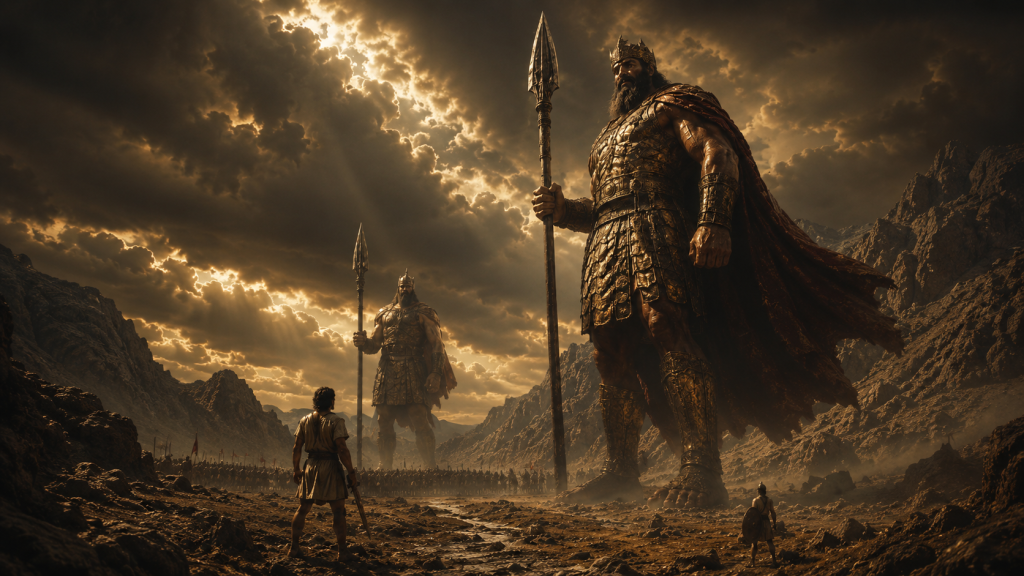
The Cross-Civilisation Pattern
Here is where the story becomes genuinely difficult to dismiss. The biblical account of the Nephilim does not exist in isolation. Across the ancient world, cultures with no known contact with each other recorded almost identical traditions of powerful hybrid beings who were part divine, part human and who walked the earth in a distant primordial age.
The Sumerians, whose civilisation predates biblical Israel by thousands of years, recorded the Anunnaki. Divine beings who descended from the heavens, interacted with humanity and wielded extraordinary power over human affairs. The parallels with the Watchers of Enoch are striking enough that scholars have debated the relationship between these traditions for decades.
The Greeks remembered the Titans. The primordial beings of immense power and size who predated the Olympian gods and whose conflict shaped the ancient world. Their demigods, the offspring of gods and mortal women, mirror the Nephilim account almost precisely. Hercules, Achilles, Gilgamesh? These were the ancient world was full of stories about beings who were neither fully divine nor fully human but something in between.
The Mayans recorded the beings of the first creation as giants. Norse mythology preserves the memory of the Jotun. An ancient giant beings who existed before and alongside the gods. Aboriginal Australian traditions speak of the Wandjina. The powerful sky beings who descended and shaped the world. Native American traditions across multiple nations record the memory of a race of giants that once inhabited the land.
The question is not whether these traditions exist. They clearly do, documented by anthropologists and historians across every inhabited continent. The question is what they mean. Are they all independently invented mythology? Or are they cultural memories of something real, filtered through thousands of years of oral tradition and religious interpretation?
The Nephilim After the Flood
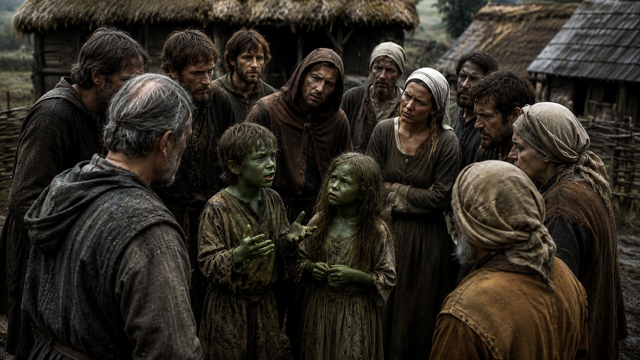
One of the most overlooked details in the Nephilim story is that they appear to survive the flood. Numbers 13 records the Israelite spies returning from Canaan with a terrifying report. They encountered the descendants of Anak and the Anakim which felt like grasshoppers in comparison. The text specifically identifies the Anakim as descendants of the Nephilim.
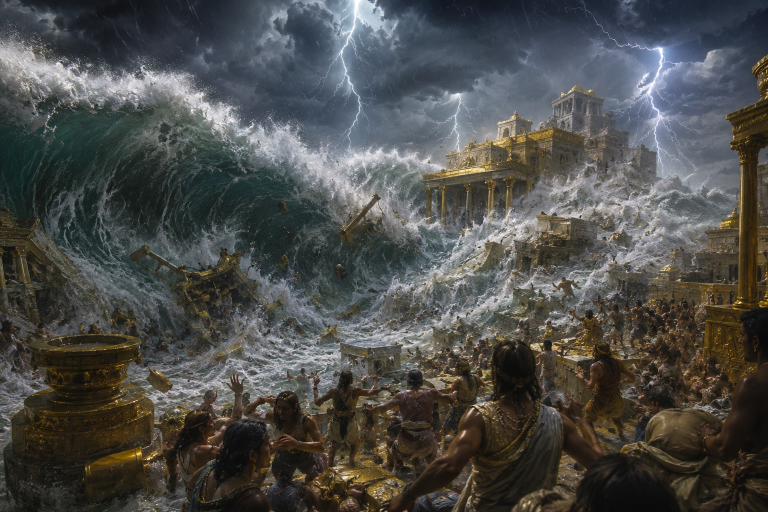
If the flood was global and wiped out all life except Noah’s family, how did the Nephilim survive? Theologians have debated this for centuries. Some suggest the sons of God descended again after the flood, producing a second generation of Nephilim. Others argue the flood was regional rather than global, allowing some populations to survive. Others point to the possibility that some of Noah’s daughters-in-law carried the genetic line that produced the post-flood giants.
Whatever the explanation, the biblical text does not treat the post-flood giants as mythological. Goliath of Gath, the giant warrior killed by David, is described in some manuscripts as standing over nine feet tall. His brothers are named. They are treated as historical figures, not legends. David’s mighty men are recorded as killing several of them in battle. These are presented as military engagements, not folklore.
The Archaeological Record
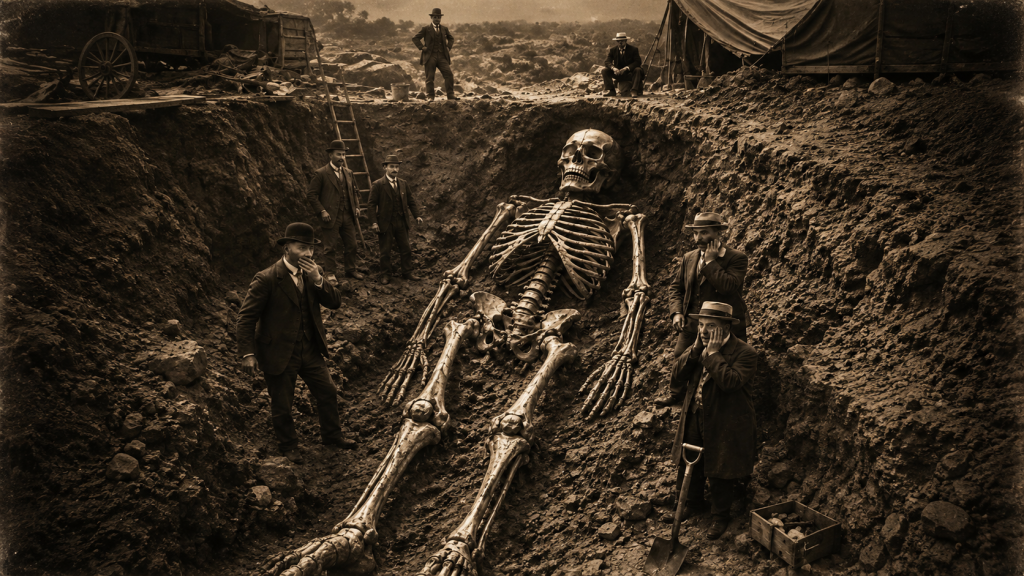
Reports of giant skeletal remains have surfaced across history. Whether real or misidentified, the pattern raises questions that science has not fully answered. From the Middle East to the Mediterranean to the Americas, cultures completely isolated from each other recorded the same thing. Beings of extraordinary size that once walked the earth.
The Nuragic civilisation of Sardinia, a sophisticated Bronze Age culture, left behind massive stone structures and traditions that spoke of giant builders. Archaeological work continues to uncover details about this civilisation that challenge conventional assumptions about ancient capabilities.
In the broader ancient Near East, the precise geographical area where the biblical Nephilim account is set. Excavations have repeatedly uncovered evidence of populations and individuals that generated serious academic debate about size, origin and identity. The academic conversation is ongoing and far from settled.
What makes the archaeological dimension genuinely interesting is not any single discovery but the consistency of the pattern. Across cultures, across continents, across thousands of years of independent development, the memory of giants persists. That kind of consistency across unconnected civilisations is not nothing. It deserves honest investigation rather than reflexive dismissal.
Why Does This Matter?
The Nephilim account sits at one of the most theologically significant moments in biblical history. Immediately before the flood, in the context of escalating human corruption, as part of the explanation for why God’s response was so severe and so complete.
If the Nephilim were real and the biblical text presents them as real, then the ancient world was far stranger and more complex than the version of history most of us were taught. The boundary between the divine and the human was apparently not always as fixed as we assume. Beings moved between realms. Offspring resulted. The consequences were catastrophic enough to warrant a global reset.
For those who take scripture seriously, the Nephilim are not an embarrassing footnote to be explained away. They are a piece of a larger picture and one that includes the ongoing conflict between divine purposes and forces that actively opposed them.
The New Testament references fallen angels in contexts that assume their reality. Jude and Second Peter both reference the angels who did not keep their proper domain as imprisoned and awaiting judgment. The assumption is that something happened. Something real.
The Eternal Question
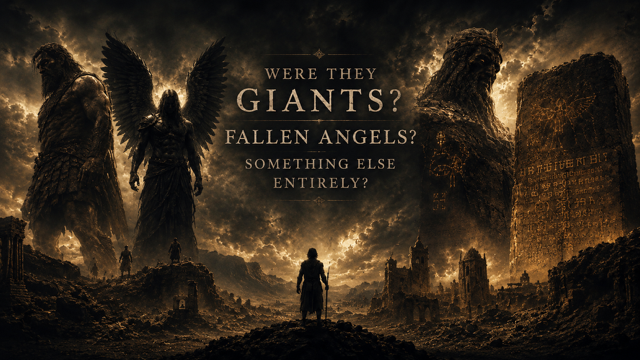
Were the Nephilim angels who crossed a forbidden boundary? Powerful ancient humans whose deeds became mythologised? A genetic anomaly that produced genuine physical giants? Evidence of an intelligence that visited earth in the ancient past and left its mark on human DNA, human culture and human memory?
The Bible raises the question and does not fully answer it. That is either deeply frustrating or deeply intentional depending on your perspective.
What it does not do is treat the Nephilim as fiction. They are presented as history. They are referenced across multiple books of scripture by authors writing centuries apart. They are echoed in the traditions of virtually every ancient culture on earth.
Something happened in the ancient world that humanity never quite forgot.
The real question is whether we are willing to take it seriously enough to keep asking.
If you are questioning this, you’ll also love reading about whether Was Atlantist and Noah’s Flood the Same Thing?
Ancient worlds. Forgotten truths. Eternal questions.
This is After Eden.