The Year Without A Summer: How a Volcano Created Frankenstein
In 1816, summer simply did not arrive. Across Europe and North America, the warm months that should have ripened the crops and filled the markets came instead with frost, snow, endless rain, and a strange, sunless gloom. People called it the Year Without a Summer, and they had no idea why their world had turned so cold and so dark.
The cause lay thousands of miles away, on a remote island in the Indian Ocean, where a mountain had torn itself apart the year before. And in one of the strangest twists in all of history, that distant eruption would lead, through a chain of unlikely events, to the creation of one of the most famous monsters ever imagined. This is the story of how a volcano gave the world Frankenstein.
The Mountain That Blew Its Top
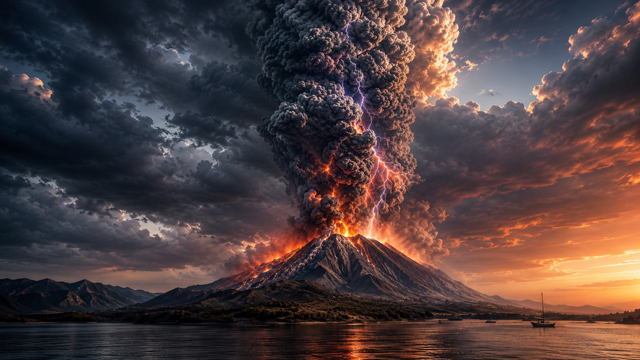
In April 1815, on the island of Sumbawa in what is now Indonesia, a volcano called Mount Tambora erupted with a force almost beyond comprehension. It was the most powerful volcanic eruption in recorded human history. The mountain, which had stood thousands of feet tall, was blasted apart, losing the entire top of its summit in the blink of a geological eye.
The immediate devastation was horrific. Tens of thousands of people were killed by the eruption itself and the famine and disease that followed in its wake across the region. The sound of the blast was heard hundreds of miles away. But the truly far reaching effect of Tambora was invisible, and it travelled much further than anyone at the time could have known.
The eruption hurled an immense cloud of ash and sulphurous gas high into the upper atmosphere, far above the level of ordinary weather. There, the fine particles and chemicals spread out and formed a vast, thin veil that slowly wrapped itself around the entire planet. This veil did something simple and devastating. It reflected a portion of the sun’s light back into space before it could reach the ground.
The whole Earth, very slightly but very significantly, began to cool. And the following year, the world paid the price.
A World Plunged In To Doom
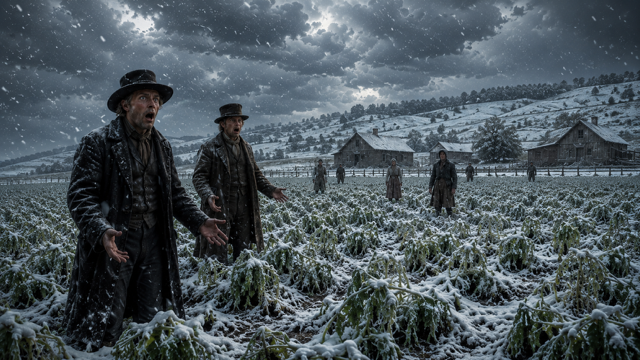
By 1816, the effects of Tambora’s veil had taken hold, and the consequences were felt right across the Northern Hemisphere. In New England, in America, snow fell in June. Frost struck in July and August, killing crops in the fields. Farmers watched in despair as their harvests failed again and again under a sky that never seemed to warm.
In Europe, still exhausted and impoverished after years of war, the situation was just as dire. The summer was bitterly cold and relentlessly wet. Harvests rotted in the fields or never grew at all. Food prices soared, and famine spread through town and country alike. There were food riots. Disease followed hunger, as it always does. For many ordinary people across two continents, the Year Without a Summer was a catastrophe of cold, hunger, and fear, and they endured it without ever understanding its cause.
The relentless grey skies, the storms, the strange and lingering darkness all settled over Europe like a shroud. And it was into this gloomy, rain soaked summer that a small group of writers arrived on the shores of Lake Geneva, in Switzerland, looking for a holiday. What they found instead was a season of confinement that would change literature forever.
Trapped Indoors By Lake Geneva
In the summer of 1816, the famous and scandalous poet Lord Byron rented a grand house called the Villa Diodati, overlooking Lake Geneva. He was joined there by a small circle of companions, among them his personal physician John Polidori, the poet Percy Bysshe Shelley, Shelley’s young companion Mary Godwin, who would later become Mary Shelley, and Mary’s stepsister Claire Clairmont.
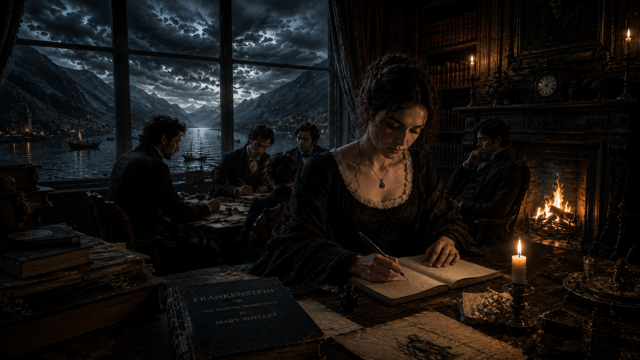
They had hoped for sunshine, boating, and long walks in the Swiss countryside. The volcano had other plans. Day after day, the weather was atrocious, cold winds, driving rain, and dramatic thunderstorms rolling across the lake. Confined indoors with little to do, the group sat around the fire in the evenings, talking, reading, and looking for ways to pass the long, dark hours.
To entertain themselves, they began reading aloud from a collection of German ghost stories. The eerie tales, combined with the storms raging outside and the strange mood of that sunless summer, stirred something in the group. And then Byron made a suggestion that would echo down the centuries. He proposed that each of them should try to write a ghost story of their own.
The Birth Of A Monster
The challenge was set, but inspiration did not come easily to everyone. Most of the group struggled. Byron and Shelley, for all their genius as poets, were not natural writers of horror. But for one member of the party, the idea took root in a way no one could have predicted.
Mary Godwin, just eighteen years old, found herself unable to think of a story at first. Then, after an evening of conversation about science, electricity, and the strange new idea that life itself might one day be reanimated by human hands, she went to bed and experienced what she later described as a kind of waking dream. In her mind’s eye she saw a pale student of science kneeling beside the thing he had assembled, and she saw that creature stir into hideous life.
That terrifying vision became the seed of her story. Over the following months she expanded it into a full novel, a tale of a brilliant young man who creates life from dead matter, only to recoil in horror from his own creation and abandon it, with tragic and devastating consequences. She called it Frankenstein, and it was published a couple of years later, in 1818. It would go on to become one of the most influential novels ever written, often regarded as the very first work of true science fiction.
And Mary was not the only one whose imagination was lit by that strange summer. Byron’s physician, John Polidori, took a fragment of an idea from Byron himself and developed it into a short story called The Vampyre. It was the first modern vampire tale in English literature, and it shaped the entire genre that followed, paving the way decades later for Dracula and for nearly every vampire story we know today.
So in a single rain lashed summer, in one house beside one lake, the modern science fiction novel and the modern vampire were born together, both of them children of a volcano.
The Long Reach Of A Distant Mountain
What makes the story of the Year Without a Summer so haunting is the sheer length of the chain of cause and effect. A mountain exploded on a remote island, and the consequences rippled outward across the entire world. It darkened the skies of Europe and America, ruined harvests, caused famine and misery for countless ordinary people, and it kept a handful of writers shut indoors beside a Swiss lake until, out of boredom and gloom, they reached for their pens.
It is a reminder of how deeply connected our world truly is, how an event in one corner of the planet can reshape lives and even ideas on the other side of the globe. The people shivering through that sunless summer had no way of knowing that a volcano was to blame, and certainly no way of knowing that the same darkness chilling their crops was also giving birth to a monster that would outlive them all.
The summer of 1816 never came. But out of its cold and its gloom, something extraordinary was created. And nearly two centuries later, Frankenstein’s creature still walks, the strange and immortal child of a year the sun forgot to shine.
A short video on this topic on our After Eden Youtube Channel.
If you enjoyed this article, you might also be interested in reading about The Carrington Event: The Solar Storm That Could End Modern Civilisation.
For daily shorts and reels, follow us on our socials below.