The Great Stink of 1858: The Summer London’s River Nearly Emptied Parliament.
In the summer of 1858, the most powerful empire on Earth was very nearly brought to its knees by a smell. Not a war. Not a rebellion. Not a financial collapse. A smell. The River Thames, which flowed right past the seat of British government, became so unbearably foul that the lawmakers of the world’s greatest empire seriously considered packing up and fleeing the city altogether.
They called it the Great Stink. And as ridiculous as it sounds, it was a genuine crisis, one that drove members of Parliament from their chambers with handkerchiefs pressed to their faces and curtains soaked in chemicals. But out of that summer of misery came something extraordinary, a feat of engineering so brilliant that Londoners still rely on it to this day. This is the story of how a truly disgusting smell built the modern city.
A River Pushed Past Breaking Point
To understand how things got so bad, you have to picture London in the middle of the nineteenth century. The city was booming. Its population had swollen to well over two million people, packed tightly into a sprawling, overcrowded capital. And all of those people had to do what people do.
For centuries, London’s waste had been collected in cesspits beneath houses, emptied by hand and carted away. But two things changed that. First, the flush toilet, or water closet, had become fashionable, and while it was a marvel of comfort, it produced enormous volumes of liquid waste that the old cesspits simply could not hold. Second, the authorities had begun connecting household drains directly to the street sewers. Those sewers had only ever been designed to carry away rainwater, and they all emptied into one place. The Thames.
So the great river that ran through the heart of London became, in effect, an open sewer. The waste of more than two million people poured into it, along with the runoff from slaughterhouses, factories, and tanneries. And here is the truly grim part. The Thames was also where many Londoners drew their drinking water. The city was poisoning itself, and it had been getting worse for years.
All it needed was a spark. In the summer of 1858, that spark was the weather.
The Summer It All Boiled Over
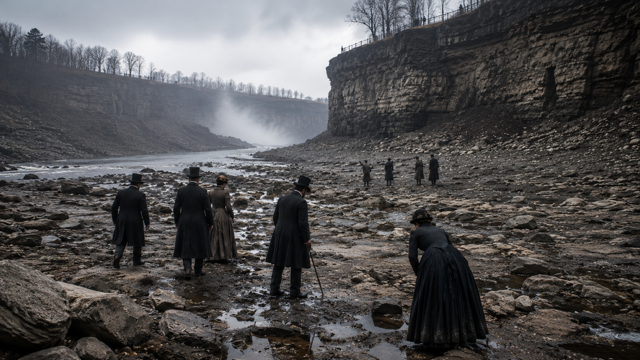
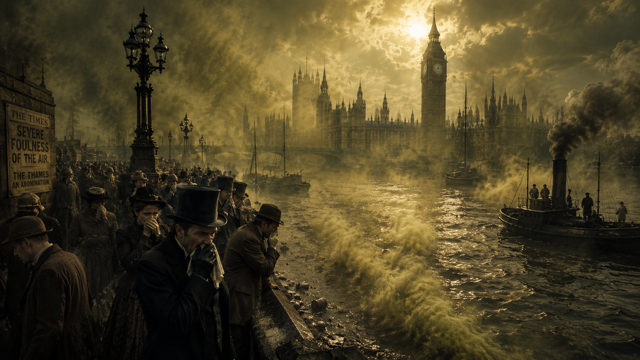
The summer of 1858 was unusually hot. As temperatures climbed, the water level of the Thames dropped, and the vast quantities of raw sewage and filth piled along its banks and shallows began to bake in the sun. The heat caused the waste to ferment, and the river released a stench so overpowering that it stopped the city in its tracks.
Contemporary accounts struggled to describe it. People reported being physically sickened simply by walking near the water. Riverboat travel became an ordeal. The smell crept into homes and businesses across the capital, but nowhere was it worse than along the riverside, where one particular building stood right on the bank, its windows looking out directly over the reeking water. That building was the Palace of Westminster, home to the Houses of Parliament.
The timing could not have been more poetic. The men who governed Britain and a quarter of the globe found themselves trapped in the very heart of the stink, unable to escape it.
Curtains, Chemicals and a Desperate Parliament
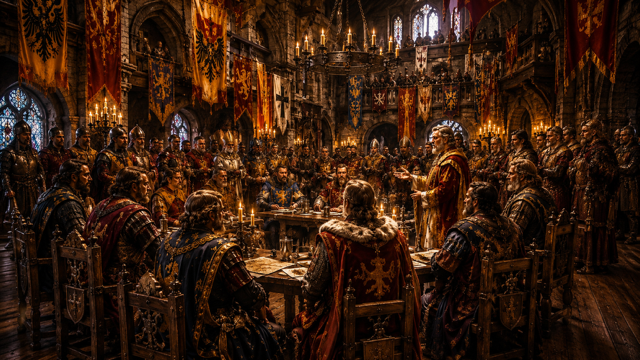
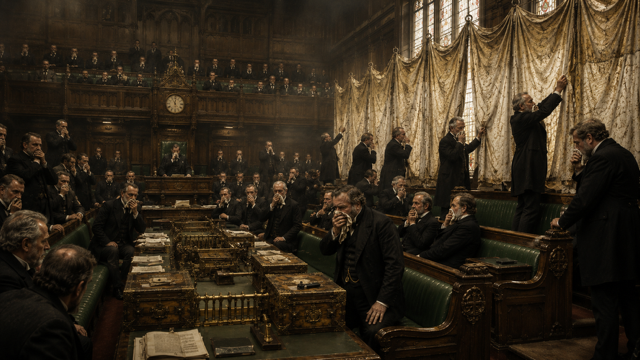
The reaction inside Parliament was almost comical, though it certainly did not feel that way to those living through it. The smell pouring in from the Thames was so foul that the business of government became nearly impossible. Committee rooms on the river side of the building had to be abandoned. Members fled their meetings gagging, clutching handkerchiefs to their noses.
In a frantic attempt to make the building usable, the curtains that hung across the riverfront windows were drenched in chloride of lime and other chemicals, in the hope that the treated fabric might block or mask the appalling odour drifting in off the water. It did little good. Tonnes of lime were also dumped into the river itself and along its banks, a desperate effort to neutralise the smell at its source.
Nothing worked. The stench was simply too vast. And so, remarkably, the politicians of the British Empire began to seriously discuss the unthinkable, abandoning the Palace of Westminster entirely and moving the work of government upriver, away from the poisoned water, perhaps to somewhere like Hampton Court or further out still.
There was also real fear behind the disgust. At the time, most people believed in what was called miasma theory, the idea that disease was spread by foul air and bad smells. London had suffered terrible outbreaks of cholera in the preceding years, and the people genuinely believed the stinking river was not just unpleasant but deadly, capable of breathing sickness into the entire city. They were wrong about the mechanism, as cholera in fact spreads through contaminated water rather than smell, but they were absolutely right that the filthy Thames was
The Crisis That Built a City
Here is where the story turns from farce to triumph. For years, plans to clean up the Thames had been debated, delayed, and dodged because of the staggering cost involved. But now, with the smell quite literally in their nostrils and their own comfort on the line, Parliament suddenly found both the will and the money to act. Rarely in history has self interest produced such a magnificent public good.
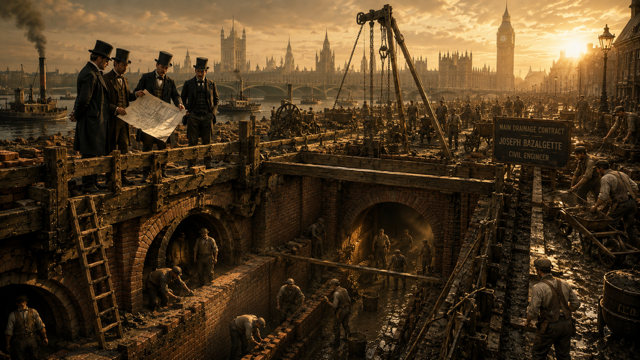
In a matter of weeks, legislation was rushed through to fund a complete overhaul of London’s sewers. The man given the colossal task was a civil engineer named Joseph Bazalgette, the chief engineer of the Metropolitan Board of Works. What he designed and built would become one of the great engineering achievements of the entire Victorian age.
Bazalgette created an enormous network of underground sewers, more than a thousand miles of smaller street sewers feeding into great main intercepting sewers that ran beneath the city. Instead of dumping waste into the Thames in the middle of London, these new tunnels carried it far downstream, away from the population, before releasing it. He built grand new embankments along the river to house the largest sewers, reclaiming land and reshaping the very face of London in the process.
Crucially, Bazalgette thought ahead. When he calculated the size of pipe the city would need, he then doubled it, reasoning that this was a thing you only got the chance to build once and that London would keep growing. That single decision was so far sighted that his system, built in the eighteen sixties, still serves the heart of London today, more than a century and a half later.
The effect on public health was dramatic. By removing the sewage from the water supply, Bazalgette’s sewers helped bring an end to the cholera epidemics that had haunted the city. He had set out to banish a smell, and in doing so he saved untold thousands of lives.
The Smell That Changed the World
The Great Stink of 1858 is, on the surface, a faintly ridiculous chapter of history, the summer the British Empire was nearly defeated by a bad smell, the summer politicians soaked their curtains in chemicals and plotted their escape. It is easy to laugh at, and rightly so.
But it is also one of the clearest examples in history of a disaster forcing progress. For years the problem had been ignored because it was expensive and unpleasant to fix. It took the discomfort reaching the noses of the powerful before anything was finally done. And when it was done, it was done magnificently.
So the next time you turn on a tap or flush a toilet without a second thought, you might spare a moment for the summer of 1858, when London grew so unbearably foul that it had no choice but to build itself a future. The stink passed, as stinks do. The sewers remain.
A short video from our After Eden Youtube channel based on this story.
If you enjoyed this story, you might enjoy reading about The Carrington Event: The Solar Storm That Could End Modern Civilisation.
Feel free to follow us on our socials below for daily shorts and reels.