
The Baghdad Battery: Did Ancient People Discover Electricity?
In 1938, an Austrian archaeologist named Wilhelm König was sorting through a collection of artifacts at the National Museum of Iraq in Baghdad when he came across something deeply unusual.
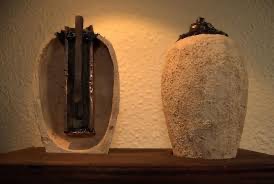
It was a small clay jar about 14 centimetres tall and it was sealed with asphalt and containing a copper cylinder surrounding an iron rod. There were also traces of an acidic substance, possibly vinegar or fermented grape juice, still clinging to the interior.
König looked at the object for a long time. Then he wrote a paper suggesting the unthinkable: that it was a galvanic cell. A battery. Built two thousand years before Alessandro Volta invented his voltaic pile in 1800 and changed the world forever.
The academic community largely ignored him. But the object, now known as the Baghdad Battery, or the Parthian Battery has never gone away. It sits today in the Iraq Museum in Baghdad, and the debate it sparked has only grown louder with time. “The Baghdad Battery predates the modern battery by roughly 2,000 years. Whether it was actually used to generate electricity is one of archaeology’s most captivating unsolved questions.”
The Discovery
What Was Found, and Where The jar was found during excavations at Khujut Rabu’a, a site southeast of Baghdad, in the late 1930s. The region was part of the Parthian Empire which is an sophisticated Iranian civilisation that ruled Mesopotamia from around 250BC to 224 AD, although some scholars date the object to the later Sassanid period.
The construction is surprisingly precise. The clay jar forms an outer casing. Inside sits a copper sheet rolled into a cylinder, capped at the bottom with a copper disc and sealed with asphalt.
Through the centre runs an iron rod, insulated from the copper by more asphalt at the top. It is structurally, a remarkably competent design for containing and separating two dissimilar metals. This is exactly what you need for a basic electrochemical reaction.
The Specifications
- Height: approximately 14 cm (5.5 inches)
- Outer vessel: terracotta clay jar
- Inner cylinder: rolled copper sheet, ~3.8 cm diameter
- Central rod: iron, suspended inside copper cylinder
- Sealant: asphalt (bitumen), insulating rod from copper
- Residue: traces of acidic substance (possibly vinegar, wine, or citric acid)
- Date: estimated 250 BC – 224 AD (Parthian period)
In the 1940s and again in subsequent decades, researchers built faithful replicas of the Baghdad Battery and filled them with acidic liquids available to the ancient world, such as grape juice, vinegar, lemon juice. The results were consistent and striking.
The replicas generated between 0.5 and 2 volts of electricity. Not enough to power a city. Not enough to light a bulb. But enough. According to some researchers, in order to electroplate a thin layer of gold or silver onto a metal object.
Electroplating is the process of using an electric current to coat one metal with a thin film of another. It is used extensively in modern jewellery making and manufacturing. If the ancient Parthians had discovered this process, it would mean they were gilding objects with a precision and thinness that purely chemical or fire-based gilding could not easily replicate.
German Egyptologist Arne Eggebrecht claimed in the 1970s to have used a Baghdad Battery replica to electroplate a silver statuette with gold producing results within hours. He argued that many gold-coated objects in ancient collections may have been produced this way, their true method of manufacture simply never suspected.
The Case
Why Some Researchers Believe It. The pro-battery argument rests on several pillars. First, the object simply works. You can build one today, fill it with grape juice, and measure a current. That is not nothing. It is a functioning electrochemical cell, regardless of whether the ancients understood the underlying physics.
Second, there is the matter of ancient gilded objects. Some archaeologists have noted that certain artefacts from the ancient Near East bear gold and silver coatings of unusual thinness and evenness. This is more consistent with electroplating than fire gilding. No definitive proof links these objects to a battery process, but the correspondence is intriguing.
Third, the ancient world was demonstrably more sophisticated than the Victorian-era scholars who first studied it tended to assume. The Antikythera Mechanism which is a complex geared astronomical calculator recovered from a Greek shipwreck demonstrated that the ancient world was capable of mechanical complexity far beyond what had been imagined.
The Baghdad Battery invites the same question: what else did they know that we haven’t found yet?
Replicas reliably generate 0.5–2 volts when filled with acidic liquid
- Design precisely matches a galvanic cell — two dissimilar metals, acidic
- electrolyte
- Ancient Near Eastern objects show unusually thin, even metallic coatings
- Ancient civilisations (see: Antikythera Mechanism) regularly exceeded our assumptions
- Multiple similar vessels have been found in the same region
- Parthian culture was sophisticated and had signi!cant trade contacts with the Hellenistic world
Arguments Against The Battery
No ancient texts describe electrical phenomena or electroplating. There were no wires, connectors, or ancillary electrical equipment have been found. No confirmed electroplated artefacts from the period have been scientifically verified.
Mainstream archaeology suggests the jar was used for storing scrolls or sacred objects.
Many similar jars from the period had purely mundane uses, which were single artefacts without corroborating evidence and it remains isolated.
The Case Against the Battery
What Sceptics Say The sceptical position is not without merit, and it deserves to be heard clearly. The most significant problem with the battery theory is the total absence of supporting evidence. In two millennia of ancient Near Eastern texts in Sumerian, Akkadian, Aramaic, Greek, and Latin, there is not a single reference to electrical phenomena, electroplating, or anything resembling a battery-powered process.
Ancient peoples were meticulous record-keepers. They documented trade routes, legal codes, astronomical observations, medical treatments, and recipes for beer. If someone had harnessed electricity, even crudely, it seems improbable that not a single scribe would have noted it.
Furthermore, no artefact has been definitively identified as electroplated from this era. Eggebrecht’s experiment, while dramatic, was never independently replicated with ancient artefacts under controlled scientific conditions. And similar clay jars from Mesopotamia are well-documented as storage vessels. They were used for papyrus scrolls, sacred oils, or ritual objects.
The “battery” may simply be a jar. The mainstream archaeological view represented by scholars at the Smithsonian Institution and elsewhere, is that the Baghdad Battery’s resemblance to a galvanic cell is coincidental rather than intentional. A functional accident, not a discovery.
The Deeper Question
What Did the Ancient World Know? Whether the Baghdad Battery is a genuine ancient electrical device or an elaborate storage jar, it forces us to confront a more important question: how often have we underestimated the past?
The history of archaeology is, in part, a history of revised assumptions. The Hittites were called a biblical invention until archaeologists uncovered their capital. The Antikythera Mechanism was dismissed as too complex to be genuine until X-ray imaging revealed its full sophistication. Göbekli Tepe, a 12,000-year-old temple complex in Turkey, was built thousands of years before scholars believed organised religion or monumental architecture was possible.
Each discovery has pushed the known boundary of human capability further back in time. Each has made the next seemingly impossible claim a little harder to dismiss outright.
The Baghdad Battery may be a coincidence. But it sits in a long line of objects and sites that were once called impossible and turned out to be real.
The ancient world was not populated by primitive people who stumbled toward civilisation. It was home to brilliant minds working with different tools, different knowledge, and different questions than our own.
Where the Battery Is Now
The original Baghdad Battery is housed in the Iraq Museum in Baghdad. The museum suffered significant looting during the 2003 invasion of Iraq, and for a time the battery’s fate was uncertain.
It has since been confirmed as part of the collection, though access for researchers remains complicated by ongoing instability in the region.Several high-quality replicas exist in museums around the world, and the object has been reconstructed and tested by university laboratories, independent researchers, and television documentary teams on multiple occasions. Each test has confirmed the same basic result: Fill it with acid, and it makes electricity.
What the ancient Parthians made of that electricity, if they ever noticed it at all remains one of history’s most tantalising open questions.

Conclusion
The Jar That Refuses to Be Explained Two thousand years ago, someone in Mesopotamia constructed a clay jar with a copper cylinder, an iron rod, and an asphalt seal. They may have filled it with vinegar. They may have used it to gild jewellery, to produce a tingling sensation for religious rituals, or to store a sacred scroll. They may have done something with it that we haven’t yet imagined.
Or it may be a jar.
What it is not, and what no honest observer can call it is ordinary. The Baghdad Battery is a 2,000-year-old puzzle sitting quietly in a museum in Baghdad, waiting for someone to finally explain it. Until that day comes, it remains exactly what the ancient world so often is to us: a mirror reflecting our own assumptions, and a reminder of how much we still do not know.